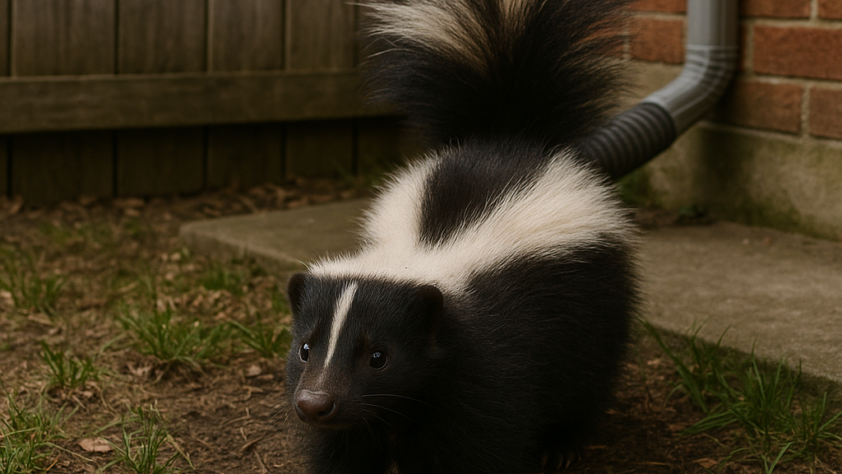
Protecting your Milton property from unwanted wildlife can be a significant concern, especially when a striped visitor decides to make itself at home. Dealing with a skunk can be particularly challenging due to its infamous defence mechanism. So you need skunk removal Milton homeowners can trust. Tarzan Wildlife Inc has served the Greater Toronto Area for 16 years. We remove skunks humanely, and we help you keep them out.
This guide walks you through the safest and most effective strategies to manage a skunk presence on your property. It covers habits, signs, first steps, DIY methods, and when professional help becomes necessary. The Government of Ontario explains how to prevent conflicts with wildlife around your home.
Understanding skunks: why they’re on your Milton property
Skunks are common nocturnal animals, and Milton’s suburban and rural areas offer an attractive habitat. They are often drawn to properties by readily available food sources, shelter, and water. Understanding what attracts them is the first step in successful skunk removal.
Common skunk habits and habitats
Skunks are opportunistic foragers, meaning they’ll eat almost anything. Their diet primarily consists of insects, grubs, small rodents, eggs, berries, and even pet food left outdoors. They are skilled diggers and will often create dens under porches, sheds, decks, or even in crawl spaces, seeking shelter from predators and the elements. These dark, secluded spots provide ideal locations for raising their young.
During breeding season, typically from late winter to early spring, skunks become more active. Females look for safe, quiet places to nest. If your property offers such amenities, it increases the likelihood of a skunk taking up residence. Their nocturnal nature means you might not see them directly, but rather find evidence of their presence.
Recognizing signs of a skunk presence
Identifying the early signs of a skunk can prevent a full-blown infestation and make skunk removal easier. The most obvious indicator is, of course, the distinctive musky odour. While it might indicate that a skunk has sprayed nearby, it doesn’t always mean one is living on your property.
Here are other key signs to watch for:
- Digging marks: Skunks leave cone-shaped holes in lawns, often when searching for grubs or insects. These holes are usually 3 to 4 inches deep and wide.
- Tracks: Their tracks show five toes with visible claws, often with the heel pad present. They look somewhat like small bear prints.
- Droppings: Skunk droppings are typically tubular, about 1/2 inch in diameter, and 1 to 2 inches long. They often contain insect exoskeletons, seeds, or berries.
- Damage to gardens or bird feeders: If your vegetable garden is being raided or your bird feeder is consistently knocked over, a skunk could be the culprit.
- Sounds: In rare instances, you might hear rustling, scratching, or even faint chirping sounds if kits (baby skunks) are present.
Early detection allows for timely intervention, often making the process of skunk removal less complicated and stressful for both you and the animal.
Initial steps for safe skunk removal in Milton
Once you’ve confirmed a skunk’s presence, the immediate goal is to encourage it to leave voluntarily and prevent it from returning. Safety is paramount during this phase, both for yourself and for the animal. Approaching a skunk aggressively is almost guaranteed to result in a spray.
Assessing the situation and ensuring safety
Before taking any action, observe the skunk’s routine from a safe distance, preferably during daylight hours when they are less active. Note where they enter and exit their den, if you can identify one. This information is crucial for planning an effective skunk removal strategy. Always wear sturdy gloves and long sleeves when working near potential den sites, even if you don’t expect direct contact. If you encounter a skunk, move slowly and avoid sudden movements. Skunks often give warning signs before spraying, such as stomping their front feet, hissing, or arching their back. Respect these warnings and retreat quietly and temporarily.
Temporary deterrents and exclusion tactics
The safest initial approach for skunk removal is to make your property less inviting. Skunks are generally docile and prefer to avoid confrontation.
Consider these temporary deterrents:
- Eliminate food sources: Store pet food indoors, secure garbage cans with tight-fitting lids or bungee cords, and clean up fallen fruit from trees. Consider temporarily removing bird feeders or catching any spilled seeds.
- Remove water sources: Ensure there are no accessible puddles or open water containers that could serve as a water source.
- Bright lights and noise: Since skunks are nocturnal, bright lights and consistent noise near their suspected den can make the area less appealing. You can place a battery-operated radio tuned to a talk station near the den entrance or install motion-activated lights.
- Chemical repellents: While less effective than physical barriers, some strong-smelling repellents like castor oil or capsaicin-based sprays might deter skunks temporarily. Always use these according to manufacturer instructions and away from areas where children and pets play.
If you’ve identified a den, a common tactic is to use a one-way exclusion door. This allows the skunk to leave but prevents it from re-entering. Before installing, ensure the skunk is out by placing a light layer of flour at the den entrance and checking for tracks after dark. If no tracks lead back in the morning, you can install the exclusion door. Remember, this method should only be used outside of breeding season (typically April to August) to avoid trapping baby skunks inside.
DIY skunk removal methods: what works and what doesn’t
While many prefer to handle wildlife issues themselves, it’s essential to understand the limitations and potential risks of DIY skunk removal. Some methods are more effective and humane than others.
Live trapping: best practices and legalities
Live trapping can be an effective method for skunk removal, but it comes with significant considerations. Firstly, always check local regulations. Milton, being part of Ontario, adheres to provincial wildlife regulations. In Ontario, it is illegal to relocate a trapped animal more than one kilometre from where it was captured without specific permits. This is to prevent the spread of diseases and to protect local ecosystems. Furthermore, releasing a skunk into an unfamiliar territory often leads to its demise due to stress, lack of food, or conflict with existing wildlife. Therefore, if you trap a skunk, you’re generally expected to humanely release it nearby or contact a professional wildlife removal service for proper handling. For more detailed information on wildlife regulations, you can consult the Ontario Ministry of Natural Resources and Forestry.
If you choose to use a live trap:
- Choose the right trap: Use a sturdy, humane trap specifically designed for animals of skunk size.
- Bait the trap: Peanut butter, cat food, or canned sardines work well as bait.
- Placement: Place the trap on a level surface near the skunk’s known travel paths or den entrance.
- Monitor frequently: Check the trap at least twice a day, preferably early morning and late evening, to minimize the animal’s stress and reduce the likelihood of it spraying.
- Cover the trap: Once caught, cover the trap with a blanket or tarp to calm the skunk and reduce the likelihood of it spraying.
- What to do next: Given the relocation restrictions, contacting a professional for proper skunk removal is often the most humane and legally compliant option after live capture.
Natural repellents and their effectiveness
Many home remedies and natural repellents are touted for skunk removal, but their effectiveness can vary greatly. Strong odours are often suggested because skunks have a keen sense of smell.
Common natural repellents include:
- Ammonia-soaked rags: Placing rags soaked in ammonia near a den entrance might deter a skunk, as the smell mimics a predator’s urine. However, the effect is often temporary, and the skunk may simply move to another spot.
- Citrus peels: Some people report success with scattering citrus peels around areas skunks frequent. The strong citrus scent is thought to be unpleasant to them.
- Hot pepper spray: A homemade spray made from cayenne pepper mixed with water can deter skunks from gardens. However, it needs frequent reapplication, especially after rain, and can irritate other animals or even children.
- Predator urine: Products containing coyote or fox urine are marketed as repellents. While they can sometimes deter, they also need consistent application and can be costly.
In general, natural repellents offer a temporary solution at best. They are rarely effective for long-term skunk removal, especially if a skunk has already established a den or a consistent food source is on your property. Physical exclusion and eliminating attractants remain the most reliable methods.
Dealing with skunk spray: immediate actions
If you or your pet are sprayed by a skunk, immediate action is necessary to neutralize the odour. The notorious smell comes from thiols, sulfur-containing compounds that are extremely potent.
For pets:
- Act quickly: The longer the spray stays on, the harder it is to remove.
- Mix a solution: Combine 1 quart of 3% hydrogen peroxide, 1/4 cup of baking soda, and 1 to 2 teaspoons of liquid dish soap.
- Apply thoroughly: Wash your pet immediately with this solution. Lather well, focusing on affected areas, and avoid getting it in their eyes.
- Rinse and repeat: Rinse thoroughly with lukewarm water. You may need to repeat the process several times for full effectiveness.
- Follow with regular shampoo: After the odour is mostly gone, wash with your pet’s regular shampoo.
For humans:
- Wash skin and hair: Use the same hydrogen peroxide/baking soda/soap solution. Apply to affected skin and hair, let it sit for a few minutes, then rinse thoroughly.
- Clothes: Wash contaminated clothing separately in hot water with a cup of baking soda or specialized skunk odour remover. If the smell persists, dry cleaning might be an option, but some items may be permanently affected.
- Inside your home: Air out the affected area thoroughly. Use enzymatic cleaners on surfaces and fabric refreshers. Placing bowls of white vinegar or activated charcoal can help absorb lingering odours.
When to call professional skunk removal services
While DIY methods can be effective for minor skunk issues, there are many situations where professional skunk removal services are not just recommended, but essential. Attempting to handle a complex skunk problem yourself can lead to further damage, unnecessary stress, or even injury.
Complex scenarios requiring expert intervention
Certain situations make professional help invaluable:
- Denning under structures: If skunks have nested under your porch, shed, deck, or in your crawl space, accessing and removing them safely can be extremely difficult and often requires specialized equipment. Professionals can safely install one-way doors or traps and seal entry points.
- Presence of babies (kits): Never attempt to remove a mother skunk if you suspect she has kits. Separating them is inhumane, and the babies will die without their mother, potentially creating another problem. Professionals are trained to ensure the safe and humane removal of both the mother and her young, especially during the spring and early summer months.
- Aggressive skunks: While generally docile, a skunk feeling cornered, threatened, or ill might become aggressive. A professional understands animal behaviour and can handle such situations without provoking a spray or injury.
- Large numbers of skunks: If you’ve noticed multiple skunks on your property, it indicates a larger attractant issue or possibly a den. A professional can identify the source of the problem and implement a comprehensive skunk removal plan.
- Repeated attempts failed: If your DIY efforts have not yielded results, it’s a clear sign that a different approach is needed. Professionals have the experience and tools to tackle persistent issues.
- Health risks: Skunks can carry diseases such as rabies, distemper, and leptospirosis, although the risk to humans is low. Any direct contact or bite should be immediately reported to public health authorities. If you suspect an animal is sick, do not approach it.
Benefits of professional skunk removal
Hiring a professional for skunk removal offers several distinct advantages:
- Expertise and experience: Professionals possess in-depth knowledge of skunk behaviour, local wildlife regulations, and the most effective and humane removal techniques. They can quickly assess the situation and implement a tailored plan.
- Safety: They use specialized equipment and follow strict safety protocols to protect themselves, your family, your pets, and the skunks during the removal process. This significantly reduces the risk of being sprayed or injured.
- Humane handling: Reputable wildlife control companies prioritize humane treatment. They aim to remove skunks without causing undue stress or harm, often using live traps and then relocating them according to regulations.
- Long-term solutions: Beyond just removing the current skunk, professionals identify and seal entry points, provide advice on habitat modification, and implement preventative measures to ensure skunks don’t return. This often includes repairing damaged structures or reinforcing vulnerable areas.
- Guaranteed results: Many professional services offer warranties or guarantees for their work, providing peace of mind that the problem will be resolved effectively and permanently.
When faced with a skunk problem that seems overwhelming or persistent, remember that professional skunk removal services are a valuable resource in Milton. They offer a safe, effective, and humane solution to a potentially messy problem.
We also provide animal control services in Milton, skunk removal in Toronto, and skunk removal services in Mississauga for homes across the GTA.
Preventing future skunk encounters in Milton
Once a skunk has been successfully removed, the final and most crucial step is to implement preventative measures to ensure they don’t return.
Securing your property against wildlife
Making your property less attractive and physically inaccessible to skunks is key to long-term prevention.
- Seal entry points: Inspect your home and outbuildings thoroughly. Seal any holes or gaps in foundations, around pipes, under decks or sheds. Use wire mesh, concrete, or other durable materials.
- Secure garbage and compost: Use garbage cans with tight-fitting, locking lids. Store them in a secure location. Compost bins should be enclosed and inaccessible.
- Manage food sources: Don’t leave pet food bowls outside, especially overnight. Clean up fallen fruit from trees. Remove bird feeders or use squirrel-proof models.
- Remove shelter: Clear away brush piles, woodpiles, and other debris where skunks might seek shelter.
- Install fencing: If appropriate for your property, a sturdy fence that is at least 3 feet high and buried at least 1 foot deep can deter skunks from entering your yard.
Ongoing maintenance and monitoring
Prevention is an ongoing process. Regular maintenance and vigilance will help keep your Milton property skunk-free.
- Regular inspections: Periodically check your property for new holes, damage to structures, or signs of skunk activity. Early detection is crucial.
- Maintain your yard: Keep your lawn well-maintained. Over-watered lawns can attract grubs, a primary food source for skunks. Consider grub control if necessary.
- Educate family members: Ensure everyone living on your property understands the importance of not feeding wildlife and securing garbage.
- Motion-activated deterrents: For particularly stubborn areas, consider motion-activated sprinklers or lights.
- Consult professionals for persistent issues: If despite your best efforts, skunks continue to be a problem, contact a professional wildlife removal service for an assessment and advice.
By taking these preventative measures, you significantly reduce the chances of needing future skunk removal services.
Call Tarzan Wildlife for skunk removal in Milton
Successfully managing a skunk on your Milton property requires a blend of understanding, patience, and proactive measures. By learning about skunk behaviour, implementing preventative strategies, and knowing when to seek professional help, you can protect your home and family while respecting local wildlife. Our skunk removal Milton team can inspect your property, remove the skunk humanely, and seal the den site. Call Tarzan Wildlife Inc at 416-899-6537 today.